
Lanzarote Road Trip: Campervan Itinerary
Lanzarote is an island made for road trips. One moment, you're driving between black volcanic fields; the next, you're passing whitewashed villages, dramatic cliffs or beaches shaped by the Atlantic Ocean.
And while the island isn't particularly large, there's much more to discover than you might expect. Rushing from one attraction to another means missing some of the places that make Lanzarote special.
So, how many days do you actually need to explore the island?
Whether you're visiting for a weekend or planning a longer campervan adventure, we've put together three two-day routes that you can enjoy separately or combine into a complete six-day Lanzarote road trip.
The idea is simple: spend two days exploring the north around Arrieta, another two discovering the wild west coast around Famara, and finish with two days among the volcanic landscapes of El Golfo and southern Lanzarote.
Along the way, you'll discover traditional villages, spectacular viewpoints, volcanic caves and coastal scenery, with practical recommendations to help you organise each day.
How to Plan a 2, 4 or 6-Day Lanzarote Road Trip?
Rather than trying to visit the entire island in just a couple of days, we recommend dividing your journey into three geographical areas.
Each route covers two days, giving you enough time to explore without constantly checking the clock.
2-day Lanzarote itinerary: Discover northern Lanzarote, including Arrieta, Punta Mujeres, Jameos del Agua and Haría.
4-day Lanzarote itinerary: Follow the northern route and add two days along the west coast, exploring Teguise, Famara, La Santa and Tinajo.
6-day Lanzarote itinerary: Complete all three routes, finishing in southern Lanzarote with Timanfaya, El Golfo, the Janubio Salt Flats and Playa Blanca.
If you only have two days but prefer beaches or volcanoes, you can also choose the west or south itinerary independently.
Travelling by campervan makes this approach particularly appealing. You can take longer in places you enjoy, adjust your plans according to the weather and discover different parts of the island without following a rigid sightseeing schedule.
Let's start in the north.
Route 1: Two Days in Northern Lanzarote – Arrieta and the Volcanic North
The north of Lanzarote is a wonderful introduction to the island.
Around Arrieta, the landscape combines traditional fishing villages, natural swimming pools, volcanic formations and green valleys that contrast with the drier scenery found elsewhere.
This two-day route is particularly suitable for travellers who enjoy nature, quiet coastal villages and some of the island's most distinctive attractions.
Day 1: Arrieta, Punta Mujeres and Jameos del Agua
Suggested route: Arrieta → Punta Mujeres → Jameos del Agua
Start your road trip in Arrieta, a small fishing village on Lanzarote's northeastern coast.
Unlike the busier resort towns, Arrieta maintains a relaxed atmosphere, with traditional houses, a pleasant seafront and local restaurants specialising in fresh seafood.
Begin with a walk through the village before heading towards Playa de La Garita, a sandy beach where you can enjoy the coastal scenery and take a break by the Atlantic.
Another interesting detail is Casa Juanita, also known as the Casa China, a distinctive building with an unusual pagoda-style roof that stands out among the village's more traditional architecture.
After exploring Arrieta, continue towards Punta Mujeres.
This small coastal village is known for its natural swimming pools, formed within the volcanic coastline. They offer a different seaside experience from the island's sandy beaches.
If you fancy a swim, always check the sea conditions and tides first, as the Atlantic can be unpredictable.
From Punta Mujeres, continue north towards one of Lanzarote's most recognisable attractions: Jameos del Agua.
Created by the artist César Manrique within a volcanic tunnel formed by the eruption of La Corona, this extraordinary space combines architecture, volcanic geology and nature.
Inside, you'll discover an underground lake inhabited by tiny endemic blind crabs, as well as carefully designed spaces that blend with the surrounding rock.
It's a particularly interesting introduction to the relationship between art and landscape that you'll notice throughout Lanzarote.
Our recommendation: Don't try to squeeze too many attractions into your first day. Arrieta, Punta Mujeres and Jameos del Agua provide a varied route with plenty of time to appreciate each place.
If you'd like to enjoy a local meal in Arrieta, Turtles Van recommends La Casa de la Playa for fish, seafood and paella, or Amanecer for fish and seafood.
Day 2: Cueva de los Verdes, Órzola, Mirador del Río and Haría
Suggested route: Cueva de los Verdes → Órzola → Mirador del Río → Haría
Dedicate your second day to exploring the volcanic and mountainous landscapes farther north.
Start with Cueva de los Verdes, another impressive section of the lava tunnel created by La Corona volcano.
Although it shares the same volcanic origin as Jameos del Agua, the experience is quite different.
Here, a guided visit takes you through underground passages where lighting reveals the shapes, textures and colours of the volcanic rock.
It's one of the most fascinating places to understand the geological history of the island.
Tickets must be purchased online for a specific date and time, so plan this visit in advance through the official Lanzarote tourism centres website.
Afterwards, continue towards Órzola, a fishing village at the northern end of Lanzarote.
The road passes through striking volcanic landscapes, and the coastline around Caletón Blanco is worth admiring for its pale sand and turquoise water.
Órzola itself is a pleasant place for a short walk around its harbour. It is also the departure point for ferries to La Graciosa, although visiting that island deserves additional time.
From Órzola, head towards Mirador del Río.
Designed by César Manrique and integrated into the cliffs, this viewpoint offers spectacular views of La Graciosa, the Chinijo Archipelago and the stretch of sea separating the islands.
On clear days, the contrast between the blue ocean, the pale coastline and the volcanic cliffs is remarkable.
Finish your day in Haría, a village surrounded by palm trees and traditional agricultural landscapes.
Known as the Valley of a Thousand Palms, Haría feels noticeably different from the open volcanic terrain of southern Lanzarote.
Take a walk through its streets, enjoy the village atmosphere and discover a quieter side of island life.
If you want to stop for a meal, Tacande and Club Social Haría are among Turtles Van's local recommendations.
Travel tip: This day combines several attractions, so prioritise Cueva de los Verdes and Mirador del Río if you prefer a slower pace. Órzola can remain an optional stop.
After two days, you'll have discovered some of the island's most distinctive volcanic formations, coastal villages and northern viewpoints.
If your trip lasts only two days, this is a complete itinerary on its own.
If you have four or six days, it's time to head west.
Route 2: Two Days on Lanzarote's West Coast – Famara, Teguise and La Santa
The west coast has a completely different personality.
Here, wide beaches meet dramatic cliffs, the Atlantic shapes the landscape and small villages reveal a more rural side of Lanzarote.
It's an especially appealing region for surfing enthusiasts, photographers and travellers who enjoy spending time outdoors.
Day 3: Historic Teguise and the Wild Beauty of Famara
Suggested route: Teguise → Caleta de Famara → Playa de Famara
Begin the third day in Teguise, the island's former capital.
Its historic centre is one of the most interesting places to explore on foot, with cobbled streets, traditional architecture, quiet squares and buildings that reflect Lanzarote's past.
Instead of treating Teguise as a quick stop on the way to the coast, give yourself time to wander through its streets.
Look out for the traditional Canarian buildings, wooden balconies and historic churches that make the town different from the island's modern resort areas.
When you're ready to continue, drive towards Caleta de Famara.
The scenery changes dramatically as you approach the coast.
The impressive Risco de Famara cliffs rise behind an enormous stretch of golden sand, creating one of the island's most recognisable landscapes.
Playa de Famara is particularly famous among surfers because of its waves and exposed Atlantic location.
If you've always wanted to try surfing, this can be a good place to arrange a lesson with a local school, taking into account the conditions and your experience.
However, Famara isn't a beach where visitors should assume swimming is safe. Strong currents, waves and wind are common, so it's essential to follow local safety advice.
Even if surfing isn't part of your plans, the beach is worth visiting.
You can enjoy a walk along the sand, admire the cliffs and watch the changing light over the coastline.
As the afternoon turns into evening, the landscape takes on a completely different character.
Our recommendation: Spend most of the afternoon around Famara rather than adding unnecessary stops. The beach and village are places to experience slowly, not simply photograph and leave.
Day 4: Soo, La Santa and the Volcanic Countryside of Tinajo
Suggested route: Soo → La Santa → Tinajo
For your fourth day, explore the less tourist-oriented landscapes of western Lanzarote.
Begin by travelling through Soo, a small inland village surrounded by agricultural land and open scenery.
This area forms part of a landscape where sandy soils, traditional farming and the island's volcanic history come together.
The contrast between the cultivated land and the surrounding hills gives this part of Lanzarote a character of its own.
Continue towards La Santa, a coastal village particularly well known in the surfing community.
Unlike Famara's broad sandy beach, the coastline around La Santa is rockier, with powerful Atlantic waves.
The famous El Quemao wave attracts highly experienced surfers when the conditions are suitable.
For most visitors, simply watching the waves and enjoying the fishing-village atmosphere is a better plan than entering the water.
Take some time to walk around the village before continuing inland towards Tinajo.
Tinajo lies in a landscape shaped by volcanic activity, with dark lava fields and agricultural areas that reveal how island life has adapted to the terrain.
If you're interested in understanding more about the volcanic history of Lanzarote, consider visiting the Mancha Blanca Visitor and Interpretation Centre, which introduces visitors to the geology and natural environment of Timanfaya.
It's a useful stop before exploring the national park during the next stage of the itinerary.
Travel tip: The west coast is often windy, so keep your plans adaptable. You might prefer a longer walk around Famara on a calmer day and spend more time exploring villages when conditions are less favourable.
If you're travelling with Turtles Van, Charly can help you organise this section of the route and suggest how best to connect the northern villages with the west coast.
After four days, you'll have experienced two very different sides of Lanzarote: the volcanic north and the rugged Atlantic coastline.
If you have another two days available, continue south towards some of the island's most extraordinary landscapes.
Route 3: Two Days in Southern Lanzarote – Timanfaya, El Golfo and Janubio
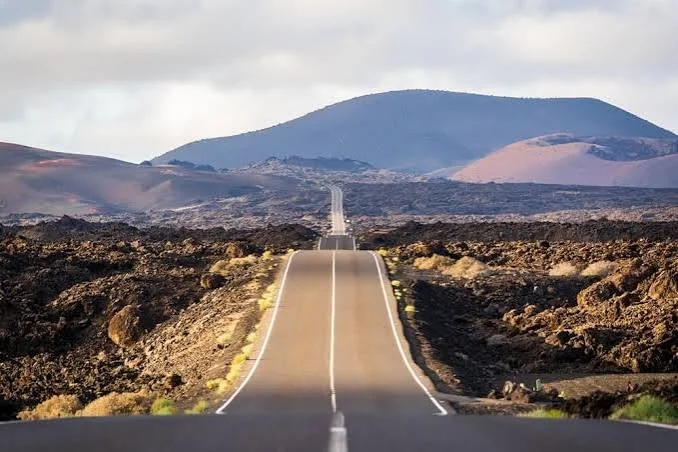
Southern Lanzarote is where the island's volcanic origins become especially visible.
Here, black lava fields stretch across the landscape, volcanic craters dominate the horizon and small coastal villages sit beside formations created by centuries of geological activity.
This final two-day route focuses on the area around El Golfo, combining volcanic scenery, traditional villages and the island's southern coastline.
Day 5: Timanfaya National Park, Yaiza and El Golfo
Suggested route: Montañas del Fuego → Yaiza → El Golfo
Begin the day with one of Lanzarote's most important natural attractions: Timanfaya National Park.
The landscape here was largely shaped by the volcanic eruptions that took place between 1730 and 1736.
As you approach the park along the authorised road, you'll see enormous lava fields, volcanic cones and rocky terrain in different shades of black, brown and red.
Visiting Montañas del Fuego is one of the most memorable ways to understand this part of the island.
The official visitor experience includes a coach route through the volcanic landscape, allowing travellers to see protected areas that cannot be explored freely by private vehicle.
Because Timanfaya is a protected national park, visitors must follow authorised routes and access restrictions.
Tickets for Montañas del Fuego must be purchased online for a selected date and time, so this should be the first activity you organise for the day.
After visiting Timanfaya, continue towards Yaiza.
This traditional village offers a pleasant contrast to the volcanic landscape, with whitewashed houses, carefully maintained streets and local architecture.
It's a good place to slow down after the national park visit.
From Yaiza, head towards the small coastal village of El Golfo.
This is one of the most visually distinctive areas in southern Lanzarote.
The main attraction is Charco de los Clicos, often called the Green Lagoon.
Its striking green colour comes from algae living in the lagoon's saline water. Surrounded by dark volcanic sand, reddish rock formations and the deep blue Atlantic, the contrast is extraordinary.
The landscape is part of a protected natural environment, so admire the lagoon from the authorised viewing areas and respect all barriers and signs.
After visiting the viewpoint, spend some time in El Golfo village.
With its low buildings and Atlantic-facing setting, it's a pleasant place to finish the afternoon.
If you want to enjoy a meal, Casa Torano is one of Turtles Van's recommendations in El Golfo.
Our recommendation: Allow plenty of time for Timanfaya and avoid planning too many additional attractions. The combination of the national park, Yaiza and El Golfo makes for a complete day.
Day 6: Janubio Salt Flats and the Southern Coast
Suggested route: El Golfo area → Yaiza → Salinas de Janubio → Playa Blanca
For your final day, continue exploring the landscapes of southern Lanzarote.
Start by travelling towards the Salinas de Janubio, one of the island's most distinctive traditional landscapes.
These salt flats have been part of Lanzarote's salt-producing heritage for generations.
From the surrounding viewpoints, you'll see a geometric patchwork of salt ponds contrasting with the black volcanic terrain and nearby Atlantic coastline.
The colours can vary depending on the light and conditions, making this an especially interesting place for photography.
Beyond their appearance, the salt flats also tell an important story about the island's economy and the traditional methods used to produce sea salt.
Take time to appreciate the landscape from the designated viewing areas. If you are interested in the salt-production process, check whether official guided visits are available.
Important driving advice: Do not assume that the coastal road connecting El Golfo and Janubio is fully open. Access around Los Hervideros and sections of the LZ-703 has been affected by closures. Check current road information, follow official diversions and never enter restricted viewpoints or closed roads.
After visiting Janubio, you can continue towards Playa Blanca if you would like a more relaxed ending to the trip.
The southern town offers a different atmosphere from Famara or El Golfo, with a developed seafront, places to stop for refreshments and coastal walks.
It's a pleasant way to finish your six-day journey after spending so much time discovering volcanic scenery and rural villages.
If you prefer to avoid busier tourist areas, you can skip Playa Blanca and dedicate more time to the traditional villages and landscapes around Yaiza and Janubio.
Travel tip: Keep your last afternoon relatively flexible, especially if you need to return your campervan or travel to the airport later that day.
By this point, you'll have explored the northern coastline, the western beaches and the volcanic landscapes of the south, discovering how varied Lanzarote can be within a relatively small area.
Practical Tips for Your Lanzarote Campervan Road Trip
A good itinerary should help you enjoy the journey, not make you feel that every hour is already planned.
A few simple considerations can make travelling around Lanzarote easier.
Book Popular Attractions in Advance
Some of the island's most important tourist attractions require advance planning.
In particular, Cueva de los Verdes and Montañas del Fuego require online tickets with a selected date and time.
Organise these visits first and leave more flexibility for beaches, villages and scenic stops.
Respect Protected Natural Areas
Lanzarote's volcanic landscapes are beautiful but also environmentally sensitive.
Always remain on authorised roads and marked walking routes, especially around Timanfaya and other protected spaces.
Off-road driving should never form part of your campervan itinerary.
Consider the Wind and Sea Conditions
Weather conditions can vary across the island, particularly along the exposed northern and western coastlines.
Famara and La Santa are well known for their Atlantic waves, but those same conditions can make swimming dangerous.
Check local warnings and choose activities appropriate to the conditions and your experience.
Plan Overnight Arrangements Responsibly
Finding places to visit is only one part of organising a campervan road trip.
Lanzarote does not have commercial or private campsites, and travellers should never assume that camping is permitted wherever a vehicle can be parked.
Parking a vehicle and setting up camping equipment are different activities, and local signs and restrictions must always be respected.
During the campervan handover, Charly and the Turtles Van team can advise you on appropriate overnight options for your particular itinerary, taking into account the areas you plan to explore.
This personalised local guidance helps you prepare your journey without relying on unverified overnight recommendations found online.
Is It Better to Spend 2, 4 or 6 Days in Lanzarote?
The ideal length of your road trip depends on what you want to experience.
Two days are perfect for concentrating on one area instead of rushing across the entire island. Northern Lanzarote is a good choice if you enjoy coastal villages, volcanic caves and viewpoints.
Four days allow you to combine the north with the west coast. You'll have time to discover Famara, Teguise and La Santa while enjoying a varied route through traditional villages and natural landscapes.
Six days give you the opportunity to complete all three itineraries, including the volcanic scenery of Timanfaya and El Golfo.
The advantage of this approach is that you can adapt the route to your interests. You don't have to visit every attraction, and you can always spend longer somewhere that captures your attention.
That's what makes a road trip around Lanzarote so rewarding: discovering the island through its landscapes, villages and everyday life rather than simply collecting photographs of its most famous attractions.
Discover Lanzarote with Turtles Van
Whether you're planning a short getaway or a six-day road trip, exploring Lanzarote in a vintage campervan adds something special to the experience. At Turtles Van, you can discover the island in carefully restored Volkswagen T3 campervans such as Chatina, Pispita and Snoopy, combining classic style with modern comfort. If you'd like help choosing the campervan that best suits your journey or adapting these routes to your travel plans, contact Charly and the Turtles Van team. You can call +34 697 21 27 77, email turtlesvan@gmail.com, or visit the Turtles Van contact page to start planning your Lanzarote road trip.